
Learning disabilities and autism
Support shaped around you.
We support people with learning disabilities and autistic people to live with greater choice, confidence and independence. Autism and learning disability are different, and our approach focuses on the individual rather than assumptions based on a diagnosis.
Learning disabilities
Support at the right pace.
A learning disability can affect how someone understands information, learns new skills and manages everyday activities. Depending on the assessment and care plan, we can support with:
- Personal care and daily routines
- Shopping, preparing meals and household tasks
- Understanding information and making choices
- Managing money and budgeting
- Attending appointments and accessing services
- Friendships and community activities
- Education, volunteering and work
We break tasks into manageable steps, allow time to learn and build on what people can already do.
Autism
Understanding what helps.
Autistic people may experience communication, social situations and sensory information differently. We work with each person to understand what helps them feel comfortable and take part in the things they enjoy.
- Clear communication in the preferred format
- Time to understand information and respond
- Planning routines together and preparing for changes
- Recognising sensitivity to noise, light, touch or busy places
- Relationships and social activities on the person’s terms
- Building confidence with unfamiliar places and appointments
Communication and choice
Involved in every decision.
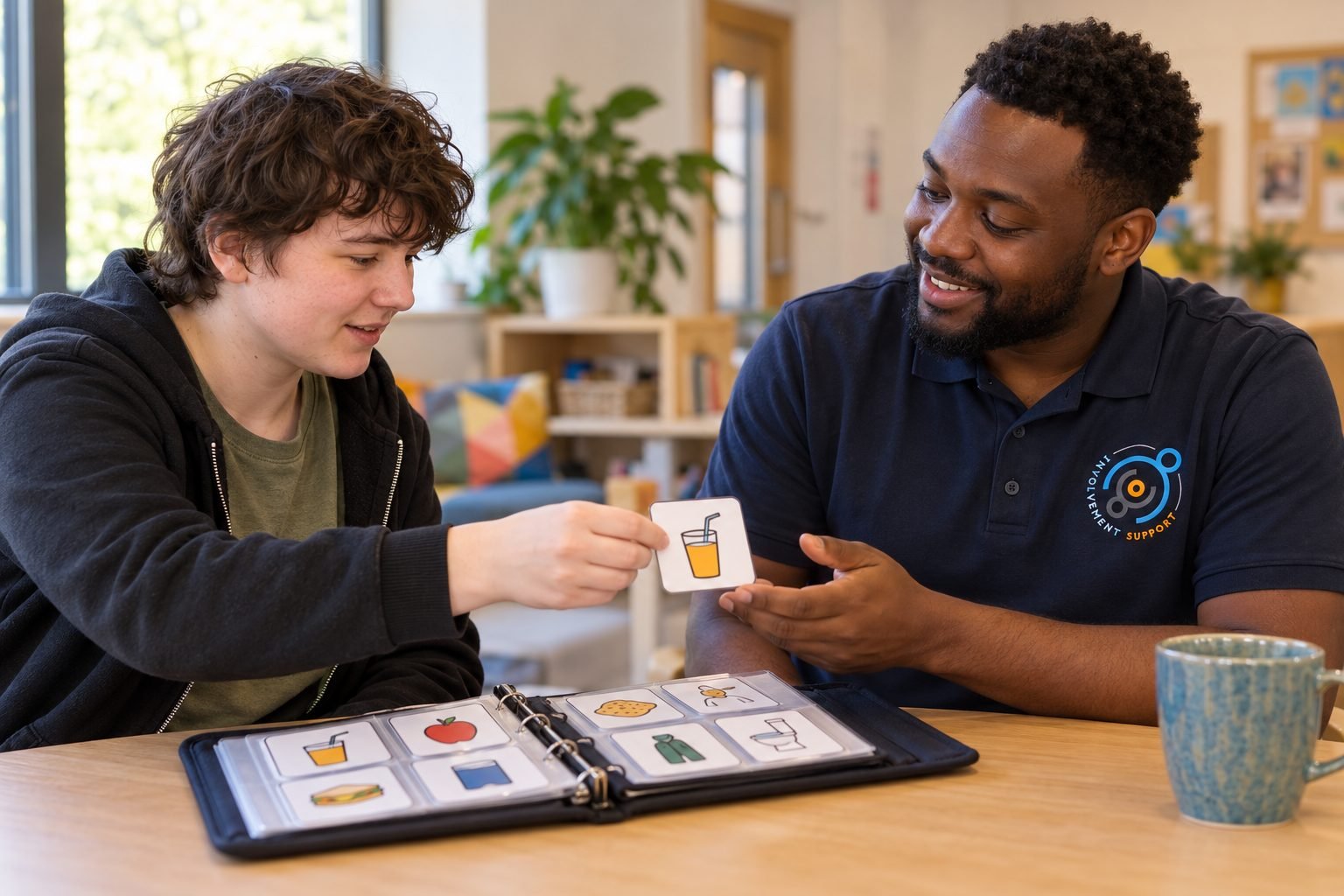
People should be involved in decisions about their own lives. We adapt how we share information, using plain language, pictures, visual prompts or smaller steps.
We listen to spoken and non-speaking communication, give people time to express themselves and check our understanding rather than making assumptions.
- Easy-to-understand information
- Visual prompts and objects of reference
- Time to think and respond
- Choices offered in a way that makes sense to the person
Understanding distress
Looking for the reason.
When someone becomes distressed, we seek to understand what may be contributing, such as communication difficulties, discomfort, changes in routine, sensory overload or other unmet needs.
Where appropriate, Positive Behaviour Support may form part of an agreed care plan, focused on reducing distress and improving quality of life.
- Checking for pain, illness or discomfort
- Considering noise, light and busy places
- Looking at recent changes in routine
- Agreeing calm, consistent responses
Working together
Building the full picture.
With involvement from family members, advocates and professionals, we build a picture of the person’s needs, preferences and goals.
Plans are reviewed as circumstances change. Progress may mean learning a new skill, feeling more confident, keeping a valued routine or getting the right support to stay well.
- Family members and carers
- Advocates
- Health and social care professionals
- Education or day services where relevant
At a glance
How we work.
Strengths, interests and what matters to them.
Small, manageable steps
With time to learn.
Their preferred way
Spoken, visual or non-speaking.
Planned together
With preparation and warning.
As things change
With the person and their circle.
Questions
Learning disability and autism FAQs
Answers to the questions we are asked most often.
Do you need a formal diagnosis?
No. A diagnosis can help us understand someone, but we focus on the person’s strengths, needs and what they want from life.
How do you support communication?
We use the person’s preferred way of communicating. That may be plain language, pictures, objects, signing or extra time to respond. We also learn from people who know them well.
How do you help with changes in routine?
We plan changes together, explain them in advance in a way that works for the person, and build in time to adjust.
Can support include work, college or volunteering?
Yes. Many people want help to explore education, volunteering or paid work, and this can be built into their plan.
What happens if someone becomes distressed?
We look for the reason behind the distress and follow an agreed plan. Positive Behaviour Support may be part of this, always using the least restrictive approach.
Next steps
Talk to us about support
Call us on 0333 301 0025 or send us a message. Our team will talk you through the next steps.